
Popcorn vs Textured Ceiling When choosing a ceiling finish, homeowners often encounter two terms that sound interchangeable: popcorn ceiling and textured ceiling. While a popcorn ceiling is technically one type of textured ceiling, the two are not exactly the same. Understanding the difference can make it easier to choose a finish for a new room, remodel an older home, or decide whether an existing ceiling should be repaired or replaced.
The main distinction comes down to appearance and texture. Popcorn ceilings have a distinctive rough, bumpy surface made from small raised particles, while textured ceilings can include many different patterns, from subtle orange peel finishes to knockdown and skip-trowel designs.
So, when comparing popcorn vs textured ceiling finishes, which one is better? The answer depends on the look you want, the age and condition of the ceiling, maintenance requirements, and whether you are working with an existing finish or starting from scratch.
What Is a Popcorn Ceiling?
A popcorn ceiling is a heavily textured ceiling finish recognized by its uneven, cottage-cheese-like appearance. It became particularly popular in American homes during the mid-20th century and remained common for decades.
The texture was traditionally applied to drywall or plaster ceilings to create a consistent rough surface. One practical advantage was that the finish could help disguise small imperfections in the underlying ceiling.
Popcorn ceilings also became popular because their irregular surface could help reduce the visibility of seams, minor dents, and other imperfections that might be more noticeable beneath a smooth finish.
Today, however, many homeowners consider popcorn ceilings dated, especially in homes being renovated or modernized.
What Is a Textured Ceiling?
A textured ceiling is a broader category that includes any ceiling with a deliberately patterned or raised surface rather than a completely smooth finish.
There are several common types of ceiling textures, including orange peel, knockdown, skip trowel, and other custom patterns. Some are subtle enough to provide visual interest without dominating the room.
Because “textured ceiling” is a broad term, comparing popcorn vs textured ceiling can be slightly misleading. A popcorn ceiling is textured, but not every textured ceiling is a popcorn ceiling.
For example, a lightly textured knockdown ceiling may have a much flatter appearance than a traditional popcorn finish.
Popcorn vs Textured Ceiling: The Main Differences
The biggest differences involve appearance, maintenance, repair, and modern design preferences.
Appearance
Popcorn ceilings have a highly recognizable, heavily raised texture. The bumps catch light and create noticeable shadows across the ceiling.
Other textured finishes can be much more subtle. An orange peel texture, for example, creates small variations across the surface without the large raised particles associated with popcorn ceilings.
For homeowners who want a contemporary appearance, subtle texture is often easier to integrate with modern interior design.
Maintenance
Cleaning a heavily textured ceiling can be difficult. Dust and cobwebs can collect around the raised areas, and aggressive cleaning can damage the texture.
A lightly textured ceiling may be easier to maintain because there are fewer deep or irregular areas where dust can accumulate.
That does not mean textured ceilings are maintenance-free. Any textured surface requires care, particularly when painted or repaired.
Repairs
One reason textured ceilings became popular was their ability to hide minor imperfections. However, repairing a heavily textured surface can sometimes be challenging because a new patch may not perfectly match the existing pattern.
With popcorn ceilings, matching the original texture can be particularly difficult if only a small section needs repair.
A professional may need to recreate the texture and repaint the affected area so the repair blends with the rest of the ceiling.
Design Style
Popcorn ceilings are strongly associated with older home styles. While they can still be appropriate in certain interiors, they are less commonly selected for modern remodeling projects.
Other textured finishes offer greater flexibility. A subtle ceiling texture can add dimension while maintaining a cleaner overall appearance.
For homeowners seeking a contemporary or minimalist design, a smooth or lightly textured ceiling may be preferable.
Is a Popcorn Ceiling Better at Hiding Imperfections?
One of the biggest practical advantages of popcorn ceilings is their ability to conceal imperfections.
Small drywall flaws, uneven joints, and minor surface irregularities may be much less visible beneath a highly textured finish than beneath a perfectly smooth ceiling.
However, this benefit comes with a trade-off. The same texture that hides imperfections can make cleaning, painting, repairs, and future remodeling more complicated.
A lighter texture can provide some of the same visual benefits without producing such a dramatic surface.
Is a Textured Ceiling Easier to Maintain?
In many cases, a lightly textured ceiling can be easier to maintain than a traditional popcorn ceiling. The answer depends heavily on the particular texture.
A shallow texture generally provides fewer deep areas for dust and cobwebs to collect. A heavily patterned finish may have maintenance challenges similar to popcorn.
When selecting a ceiling finish for a new project, it is useful to consider not only how the surface looks on installation day but also how it will be cleaned and maintained several years later.
Are Popcorn Ceilings Outdated?
Many homeowners consider popcorn ceilings outdated, particularly when updating an older home.
That does not necessarily mean every popcorn ceiling needs to be removed. Ceiling style is a matter of personal preference, and an existing finish can sometimes remain perfectly functional.
The decision becomes more important when the ceiling is damaged, difficult to maintain, or inconsistent with a planned renovation.
Before removing an older popcorn ceiling, homeowners should also determine whether the material could contain asbestos. Some older ceiling materials may contain asbestos, and the only reliable way to determine whether a particular material contains it is through appropriate testing.
If asbestos is suspected, avoid disturbing the material and seek advice from a qualified professional about testing and safe handling.
Should You Remove a Popcorn Ceiling?
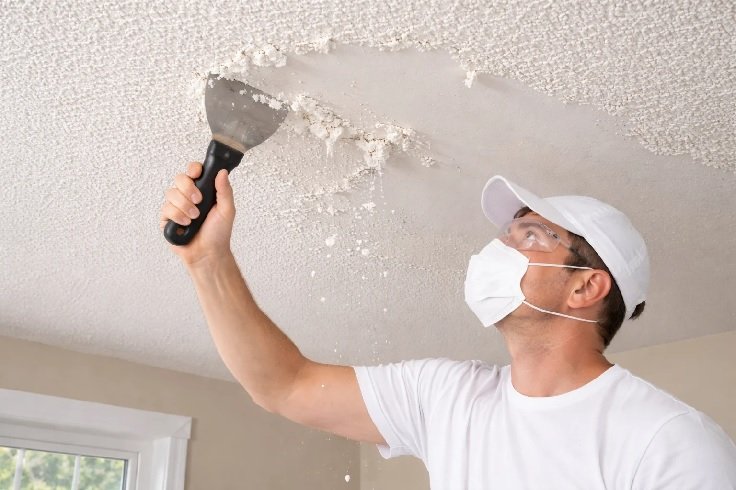
Removing a popcorn ceiling can dramatically Popcorn vs Textured Ceiling change the appearance of a room, but it is not always a simple do-it-yourself project.
The difficulty depends on factors such as the condition of the ceiling, the type of material used, how firmly the texture is attached, and what is underneath it.
Older ceilings deserve particular caution because some popcorn textures installed in past decades may contain asbestos.
If testing confirms asbestos, removal should be handled according to applicable safety requirements rather than treated as an ordinary home improvement project.
Even when asbestos is not an issue, removing popcorn texture can create a substantial amount of dust and debris. The underlying drywall may also require patching, sanding, priming, and painting after the texture is removed.
Can You Paint a Popcorn Ceiling?
Yes, popcorn ceilings can generally be painted, but the process requires care.
A roller with an appropriate nap can help cover the uneven surface, although excessive pressure can damage the texture. Spraying may also be used in some situations.
Before painting, homeowners should inspect the ceiling for loose or damaged areas. Water stains, cracks, peeling sections, or other signs of damage should be addressed before applying a new coat of paint.
Painting can refresh an existing popcorn ceiling without requiring complete removal, but it does not eliminate the underlying texture.
Common Types of Textured Ceilings
Homeowners considering alternatives to popcorn texture have several options.
Orange Peel Texture
Orange peel texture is relatively subtle and resembles the slightly dimpled surface of an orange. It can provide visual variation without the pronounced bumps associated with popcorn ceilings.
It is commonly used on walls and ceilings and can work well when a homeowner wants texture without an overly dramatic appearance.
Knockdown Texture
Knockdown texture is created by applying texture material and then partially flattening it. The result is a somewhat irregular surface with flatter areas and visible variations.
Compared with popcorn texture, knockdown finishes generally have a more contemporary appearance.
Skip-Trowel Texture
Skip-trowel texture is created using a trowel to produce an irregular, hand-applied pattern. It can create a more decorative appearance and is often associated with Mediterranean, Southwestern, or traditional interior styles.
Because it is more distinctive, the finish should be considered as part of the room’s overall design.
Smooth Ceiling
A smooth ceiling is not technically textured, but it is an important alternative to consider.
Smooth ceilings provide a clean and modern appearance and make it easier to see imperfections. They can also require more preparation because the underlying drywall must be finished carefully.
Popcorn vs Textured Ceiling: Which Is More Modern?
If modern appearance is the primary concern, a subtle texture or smooth ceiling will usually provide a cleaner visual effect than traditional popcorn texture.
That does not mean all textured ceilings look old-fashioned. Modern texture techniques can add depth and character without creating the highly raised appearance associated with older popcorn ceilings.
The best choice depends on the architecture of the home and the desired interior style.
Which Ceiling Finish Is Better for an Older Home?
For an older home, the existing ceiling condition matters more than appearance alone.
Before changing the finish, inspect the ceiling for cracks, water damage, loose material, staining, or previous repairs. If the ceiling texture is old and there is a possibility of asbestos-containing material, testing and professional guidance should come before disturbing it.
In some cases, leaving a sound ceiling in place may be more practical than removing it simply because the finish looks dated.
Which Is Easier to Repair?
A small repair can be challenging when the ceiling has a distinctive texture. The repaired section needs to blend with the surrounding pattern.
Popcorn texture can be particularly difficult to match because its raised particles create a recognizable surface.
Some lighter textures are easier to blend, although the quality of the repair depends on the original texture, the size of the damaged area, and the skill of the person performing the work.
For visible repairs, matching the existing pattern and paint color is often more important than simply covering the damaged section.
What Should Homeowners Consider Before Choosing a Ceiling Texture?
The appearance of the finished ceiling is only one factor.
Consider how easily the surface can be cleaned, how often the room is likely to need repainting, how well the finish fits the home’s design, and how difficult future repairs might be.
The ceiling’s age is also important. In an older property, determining what materials are already present can help prevent unnecessary exposure to potentially hazardous substances during renovation.
Finally, think about the long-term effect. A ceiling finish can remain in place for many years, so selecting a style solely because it is inexpensive or fashionable today may not be the best approach.
Frequently Asked Questions
Is popcorn ceiling the same as textured ceiling?
No. A popcorn ceiling is one specific type of textured ceiling. The term textured ceiling can describe many different finishes, including popcorn, orange peel, knockdown, and skip-trowel textures.
Which looks better, popcorn or textured ceiling?
This depends on personal preference and the home’s design. Traditional popcorn texture has a distinctive, heavily textured appearance, while other textured finishes can provide a more subtle and contemporary look.
Is textured ceiling better than popcorn?
A textured ceiling is not automatically better because popcorn is itself a type of texture. However, lighter textures may be easier to maintain and can provide a more modern appearance.
Can popcorn ceilings contain asbestos?
Some older popcorn ceiling materials may contain asbestos. You cannot determine whether a material contains asbestos simply by looking at it. If an older ceiling may contain asbestos, appropriate testing should be considered before disturbing the material.
Is it worth removing a popcorn ceiling?
It can be worthwhile when the finish is damaged, difficult to maintain, or inconsistent with the home’s desired appearance. However, removal can involve significant preparation and cleanup, and older materials may require special precautions.
Can you texture over a popcorn ceiling?
In some circumstances, a new finish may be applied over an existing ceiling, but the existing surface must be suitable and properly prepared. Covering an old texture does not eliminate concerns about what is underneath it.
Which ceiling texture is easiest to clean?
Generally, smoother and lightly textured surfaces are easier to clean than heavily raised textures. Popcorn ceilings can require extra care because dust and cobwebs may collect around the raised areas.
Do textured ceilings increase home value?
A ceiling texture by itself does not guarantee an increase in property value. Buyers may have different preferences, so the overall condition, design, location, and quality of the home are more important considerations.
Can a popcorn ceiling be made smooth?
Yes, a popcorn ceiling can potentially be removed or covered and the surface refinished to create a smooth ceiling. The appropriate approach depends on the ceiling’s condition and the material used.
What is the best alternative to a popcorn ceiling?
There is no single best alternative for every home. Smooth ceilings, knockdown texture, orange peel, and skip-trowel finishes can all work depending on the home’s style, maintenance expectations, and desired appearance.
Conclusion
The comparison between popcorn vs textured ceiling is ultimately a comparison between one specific ceiling style and a much broader category of finishes. Popcorn ceilings are heavily textured and recognizable, while other textured ceilings can range from subtle orange peel patterns to more decorative knockdown and skip-trowel designs.
For homeowners updating an older property, the decision should involve more than appearance. Maintenance, repairability, design preferences, ceiling condition, and the age of the existing material all deserve consideration.
If an older popcorn ceiling is being considered for removal, checking for potential asbestos-containing material before disturbing it is an important safety step. For newer installations, choosing between smooth, popcorn, or another textured finish should come down to the home’s design and the practical needs of the people living there.
A ceiling may occupy a large portion of a room’s visual space, so the right finish can make a noticeable difference. The best choice is the one that fits the home’s character while remaining practical to maintain for years to come.

1 Comment
Pingback: Zopalno Number Flight: What It Means and How to Verify a Real Flight Number